
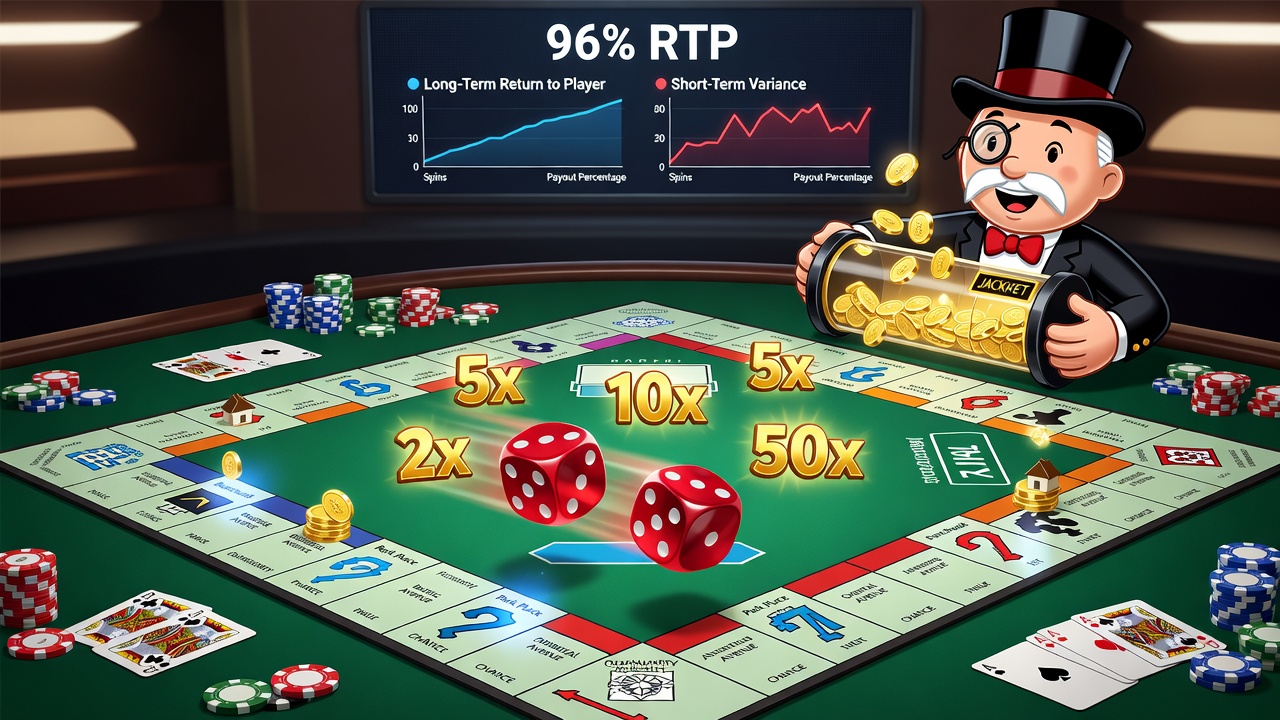
A dice game with a 96% return figure sounds generous until you realize that number is an average spread across thousands of rolls, not a promise for any single session. That gap between theoretical math and lived experience is where most players misunderstand how the Monopoly Roll casino game actually pays out. The mechanics look simple on the surface: roll dice, watch a board-style progression, collect wins tied to combinations. But underneath that simplicity sits a payout structure worth understanding before you commit real money.
This game borrows its identity from the board game everyone grew up with, yet the casino version runs on entirely different logic - probability distributions, weighted outcomes, and a bonus system that rewards patience more than luck alone. Players searching for details on monopoly roll RTP often find scattered, inconsistent numbers online, which makes it hard to separate marketing language from the actual return-to-player math. For those comparing platforms before playing, resources like monopoly roll em rtp break down live payout behavior in a way that's useful when deciding where to place real bets.
What follows is a breakdown of how the monopoly roll game actually functions - the RTP mechanics, the odds behind each payout tier, and the bonus features that separate an average session from a genuinely profitable one.
What Is the Monopoly Roll Casino Game and How Does It Work
Core Gameplay Mechanics
The monopoly roll casino game operates on a dice-based progression system rather than traditional reels or cards. Players place a wager, then a dice roll (or series of rolls, depending on the variant) determines movement along a track resembling the classic board. Each space or combination triggers a specific payout multiplier, and certain spaces activate bonus mechanics rather than direct cash rewards.
The Role of Randomization
Every roll is governed by a random number generator calibrated to replicate the probability distribution of physical dice. This matters because it means outcomes aren't manipulated round-to-round - the house edge is baked into the payout table itself, not into rigged randomness. Understanding this distinction helps explain why streaks of losses or wins don't indicate anything about future rolls.
How It Differs From Traditional Slots
Unlike slot machines, which rely on symbol combinations across paylines, the monopoly roll game ties payouts to numerical outcomes and positional movement. This creates a different volatility profile - often smoother in the short term, but still built around the same long-run mathematical guarantees that govern all casino games.
Understanding Monopoly Roll RTP: What the Numbers Actually Mean
Defining RTP in Practical Terms
Return to player represents the percentage of all wagered money a game is designed to pay back over an extended number of rounds - typically modeled across millions of simulated plays. A monopoly roll RTP figure in the mid-to-high 90s means that, over a large enough sample, the game returns that percentage to players collectively. It says nothing about what happens in your next ten rolls.
Why RTP Varies Between Platforms
Different operators sometimes run slightly different configurations of the same base game, adjusting payout tables or bonus frequency to fit their own risk models. This is why checking the specific RTP listed by your chosen platform matters more than relying on a generic industry average.
Short-Term Variance vs Long-Term Return
Because RTP is a long-run statistic, a single session can deviate wildly from the stated percentage. Players who understand this distinction stay more disciplined with bankroll management, since they're not expecting the math to "correct itself" within a short play window.
- RTP is calculated over millions of simulated rounds, not individual sessions
- Higher RTP generally correlates with lower house edge, but doesn't eliminate variance
- Bonus features can shift effective RTP upward when triggered consistently
Monopoly Roll Payout Odds Explained
How Payout Tiers Are Structured
The monopoly roll payout odds are organized in tiers tied to dice combinations and board positions. Lower-probability outcomes - like landing on a rare high-value space - carry disproportionately larger multipliers, while common outcomes pay modestly but frequently. This tiered structure keeps the game engaging without collapsing the house's mathematical edge.
Probability Behind Common Outcomes
Standard dice math applies here: certain sums (like 7, in a two-dice system) occur more frequently than extremes (like 2 or 12). Payout tables are built around this natural probability curve, meaning frequent outcomes are priced lower and rare ones priced higher - a direct reflection of real dice statistics rather than arbitrary design.
Comparing Odds Across Bet Types
Some versions allow side bets or alternate wager types layered onto the base roll. These typically carry different odds entirely, often with steeper risk-reward ratios. Players chasing bigger multipliers should understand that these side wagers usually carry a wider house edge than the core game.
Monopoly Roll Bonus Features That Shape Your Winning Potential
Property and Board-Style Bonuses
True to its thematic roots, the game includes bonus rounds triggered by landing on specific "property" spaces. These often unlock multiplier sequences or mini-games that mimic collecting rent or acquiring board assets, adding a layer of engagement beyond straight dice payouts.
Free Roll and Multiplier Triggers
Certain combinations grant free rolls - additional dice throws without additional wagers - which effectively increase the number of chances to hit a high-value outcome within a single betting round. Multiplier triggers stack on top of these, occasionally compounding across consecutive bonus rolls.
Jackpot or Progressive Elements
Some configurations of the monopoly roll bonus features include a progressive jackpot tied to rare dice sequences. These jackpots accumulate from a small percentage of each wager across all players, and hitting the qualifying combination pays out the accumulated pool rather than a fixed multiplier.
Strategic Considerations for Playing Monopoly Roll
Bankroll Management Given the Volatility Profile
Given the tiered payout structure, spreading wagers across multiple rolls rather than committing heavily to a single high-risk bet tends to smooth out variance. This doesn't change the underlying RTP, but it does reduce the chance of a rapid bankroll depletion during a cold streak.
Reading Bonus Frequency Before Committing
Before wagering seriously, review how often bonus features actually trigger on your specific platform version. Bonus frequency directly affects effective returns, since a game with rich bonus mechanics but rare triggers behaves very differently from one with modest bonuses that hit often.
Recognizing When Odds Favor the Player Least
Side bets and high-multiplier rare combinations almost always carry the steepest house edge. Recognizing these as entertainment bets rather than reliable strategy helps set realistic expectations for session outcomes.
Frequently Asked Questions
Is the monopoly roll RTP the same across every casino that offers it?
No. While the base RTP tends to stay within a similar range, individual operators can configure slightly different payout tables, so the exact percentage can vary from one platform to another. Always check the specific RTP disclosure for the version you're playing.
Does landing more bonus rounds mean the game is paying out more overall?
Not necessarily. Bonus frequency affects how often you experience extra rolls or multipliers, but the underlying RTP already accounts for that frequency in its long-run calculation. More bonuses simply mean more variance within your session, not a guaranteed higher return.
Are side bets in the monopoly roll casino game worth the risk?
Side bets generally carry a wider house edge than the core dice mechanic, making them riskier by design. They can pay out significantly more when they hit, but the odds are structured to favor the house more heavily than standard bets.
How is the randomness of dice rolls verified as fair?
Licensed platforms use certified random number generators audited by independent testing agencies to ensure outcomes match expected probability distributions. This certification process is separate from and unrelated to any specific operator's marketing claims.
Can strategy actually improve my odds in a dice-based game like this?
No strategy changes the mathematical probability of any given roll. What strategy can influence is bankroll longevity and exposure to high-variance side bets, which affects how long you can play and how smoothly your results track toward the stated RTP.
What's the difference between payout odds and RTP?
Payout odds describe the multiplier and probability for a specific outcome - like a particular dice combination. RTP is the aggregate return across the entire game's payout structure over a large number of rounds. One describes a single bet; the other describes the whole system.